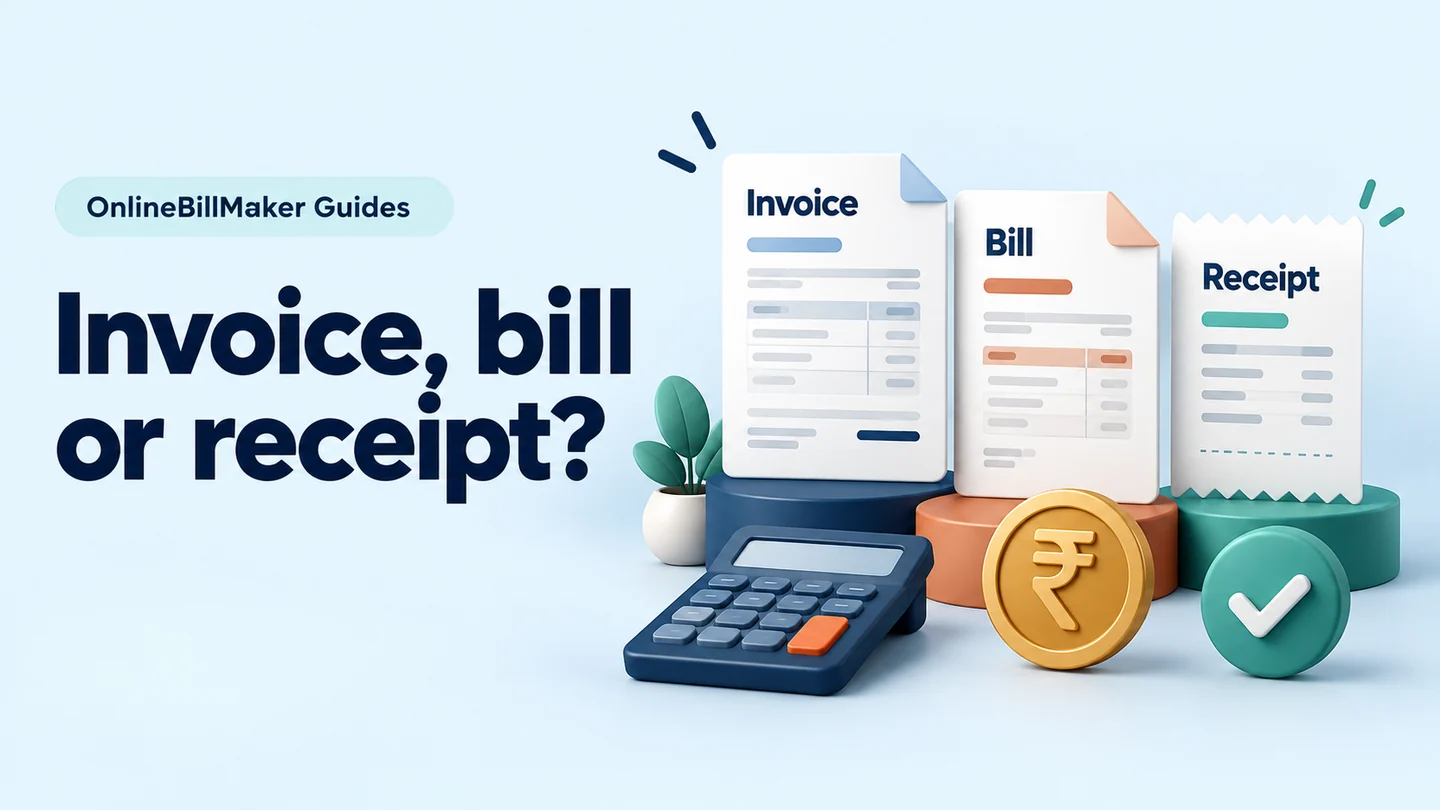
Short answer: A rent receipt relates to a payment event; a rent agreement relates to the rental arrangement. A receipt does not create or replace the contract, and a contract does not prove that a particular month’s rent was paid.
What each document means
Rent receipt: Records the rent amount a landlord or authorised recipient acknowledges for a stated rental period. It should identify the event, parties and amount using the source information relevant to that document. Keep its reference and date consistent with the issuer’s records.
Rent agreement: Sets out rental terms such as parties, premises, duration, rent and other agreed conditions. Its fields may overlap with the first document, but the overlap does not make the two interchangeable. Use the correct record name and status so another person understands what actually happened.
Key differences at a glance
| Check | Rent receipt | Rent agreement |
|---|---|---|
| Purpose | Records the rent amount a landlord or authorised recipient acknowledges for a stated rental period. | Sets out rental terms such as parties, premises, duration, rent and other agreed conditions. |
| Timing | Used at the stage described by its purpose and source. | Used at the stage described by its purpose and source. |
| What it helps explain | Records the rent amount a landlord or authorised recipient acknowledges for a stated rental period. | Sets out rental terms such as parties, premises, duration, rent and other agreed conditions. |
| What it does not prove alone | It does not replace separate evidence the recipient requires. | It does not replace separate evidence the recipient requires. |
A rent receipt relates to a payment event; a rent agreement relates to the rental arrangement. A receipt does not create or replace the contract, and a contract does not prove that a particular month’s rent was paid. The exact fields depend on the transaction and the recipient’s requirements. A logo or heading cannot change a document’s purpose or establish that an event occurred.
A practical example
A tenant has an agreement for a Pune apartment at ₹24,000 per month and pays September rent by bank transfer. The agreement supports the terms; the September receipt and transfer reference support the payment for that period.
When records describe the same transaction, compare their dates, parties, amount and references. A difference may be valid—for example, a payment can follow an invoice or a supplied quantity can differ from an estimate—but it should have an explanation and supporting evidence.
Which one should you use?
- Describe the event: proposed work, goods supplied, amount charged, booking made or money received.
- Choose the document that records that stage, rather than selecting by appearance alone.
- Check the recipient’s written requirements and keep the original issuer record where required.
- Match dates, references, quantities and amounts to orders, agreements, provider records or payment evidence.
- Keep both documents when they answer separate questions, and link them with a shared transaction reference when possible.
Common mix-ups to avoid
- Do not treat a payment screenshot as an itemised invoice or receipt.
- Do not mark an amount paid unless the issuer can match it to actual payment evidence.
- Do not copy a proposed quantity or price into a final record without checking what was supplied.
- Do not assume a document title or template makes a record official, tax-compliant or approved.
Using an online format responsibly
An online template can make a truthful record easier to read, compare and retain. It does not retrieve transactions or verify a supplier, customer, airline, landlord or payment. Enter facts from a source, inspect the preview and preserve the original record for a recipient who needs an issuer-issued copy.
For a matching format, see Rent receipt format. For a related record, read Rent receipts and HRA evidence guide. The right document depends on what happened and the evidence available.
Practical checks for a reliable record
Begin by identifying the source document and the event it describes. A clean guide or template can improve readability, but the source remains the basis for names, dates, quantities, services and amounts. If the source is incomplete, contact the issuer or responsible record keeper instead of inferring a missing fact.
Keep event dates separate from preparation, submission and settlement dates. An invoice date, service period, payment date and claim date can all be different. Label the period clearly and compare it with the agreement or provider record so a later reviewer does not mistake one date for another.
Use references consistently. A document number identifies a bill or receipt, while a bank, card or UPI reference identifies a payment. Preserve both when they answer different questions. A unique reference also helps find duplicates and locate the correct version if a record later needs a correction.
Make the amount understandable from its components. Show quantities, unit prices, discounts, taxes and other adjustments separately when those details apply. Recalculate the total from the source and explain any difference between amount charged, amount paid and amount being claimed or reconciled.
Treat status as a factual statement. A draft, amount due, part payment and full settlement are not interchangeable. Use a paid label only when payment evidence supports it, and keep a balance visible when the source says that some amount remains outstanding.
A related record may answer a different question. An order can show what was requested, an invoice can list what was charged, and a receipt can acknowledge payment. Keep related records together when they form one transaction, but do not combine them in a way that hides which stage each one represents.
Check the intended reader’s requirements before submitting a document for a claim, account or tax process. A company policy, provider rule or applicable regulation may ask for evidence beyond the document itself. This guide explains record structure; it cannot promise approval or determine an individual’s eligibility.
Protect information that is not needed for the stated purpose. Include the details that identify the transaction and satisfy the recipient’s requirements, while avoiding unrelated personal data in copies shared more widely. Follow the issuer’s and recipient’s rules for storing or sending sensitive records.